
Masonry and concrete projects seem simple at first glance—mix, place, dry. Yet every smooth driveway, neat brick wall, or level patio starts with having the right gear on hand. Choosing tools that match each task saves hours of frustration, helps your mix stay consistent, and keeps edges neat. Good gear also keeps your hands and back safer while you work. This blog will discuss the must-have tools for measuring, cutting, mixing, and finishing. We cover safety gear, upkeep, and when a power tool can replace elbow grease. Whether you are patching a step or pouring a full slab, the sections below explain what to buy, why you need it, and how to use it with confidence.
Planning Your Kit
The smartest place to start is a checklist. A well-planned kit keeps trips to the store (and project delays) to a minimum. Think of tools in four groups: measuring, cutting, mixing, and finishing. Lay them out before the first bag of cement is opened.
- Project scale: Small repairs need fewer tools than a full patio pour.
- Material type: Brick, block, and poured concrete each call for slight differences.
- Weather factor: Cold or hot days affect setting time, so have extra buckets or retarders ready.
Group everything on a clean tarp. Check handles for cracks, blades for sharpness, and levels for straight edges. A smooth prep stage turns into smoother work once the dust starts to fly.
Basic Measuring Gear
Accurate lines mean strong, square work that lasts. Keep these simple items within reach:
- 25-foot tape measure for laying out walls or slab forms.
- The stainless steel builder’s square is used to check the right angles on blocks.
- Chalk line reel for long, straight control lines across a slab.
- Plumb bob to keep courses vertical when stacking bricks.
Use the tape first to mark the overall length and width. Snap the chalk line to guide form boards. Drop the plumb bob from a string to confirm that the walls stay upright every few rows. By re-checking often, you stop small errors from growing into large gaps or crooked runs.
Cutting and Shaping
Concrete and brick are hard, so cutting takes the correct force and the correct edge. Popular choices include:
- Cold chisel and club hammer for trimming single bricks.
- Masonry hand saw with carbide teeth for small block cuts.
- Angle grinder fitted with a diamond blade for fast grooves and rebar notches.
Wear safety glasses and work gloves. To keep the material from getting too hot and breaking, move the blade carefully when you use a grinder. For neat corners, score both faces with shallow passes before snapping the block along the line. Sharp, square edges help mortar joints stay tight and reduce wasted mix.
Mixing Gear Basics
A uniform mix is key to strength. Whether you choose bags or bulk cement, get the water ratio right and mix until every grain is wet:
- Five-gallon buckets marked at one-quart steps for repeatable water pours.
- Mixing hoe with a center hole that pulls dry sand through wet zones.
- Barrel-style electric mixer for batches over three bags.
Start by adding half your water, then the dry mix, and finally the remaining water. Turn the drum for at least three minutes. Aim for a peanut-butter-thick slump that can hold its shape but still flow into corners. Too soupy and the slab weakens; too stiff and it won’t bond to rebar.
Laying Bricks Right
Brickwork depends on steady joints and full bedding:
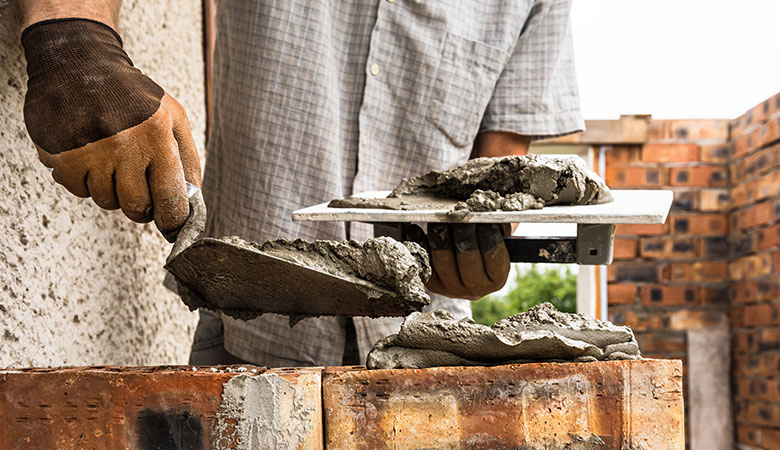
- Pointing trowel (5–7 inches) for spreading mortar.
- Brick jointer for shaping neat concave seams that shed rain.
- 24-inch spirit level and rubber mallet to tap each course into a line.
Apply a butter-thick layer of mortar, press the brick into place, and then slide it slightly to seat. Strike the joint with the jointer once the mortar firms up (about 20 minutes on mild days). This compacts the joint and drives out air pockets, cutting the chance of freeze damage later.
Pouring Smooth Concrete
Fresh concrete is heavy and sets fast, so organize tools before the truck arrives:
- The straight-edge screed board is two feet longer than the slab width.
- Magnesium floats to close surface pores after screeding.
- Steel trowel for a tighter finish on interior floors.
- Edger and groover to round borders and control cracks.
Use a sawing motion to move the screed board across the forms, moving extra mix to low spots. Let the water sheen rise, then float the surface to push larger stones down. For footpaths, a broom pass adds grip. Finally, the edge and groove, while the mix is still soft, are used to manage shrink cracks.
Safety First Always
Dust, sharp shards, and heavy loads put body parts at risk. Make protection automatic:
- N95 mask or dust respirator when cutting or mixing dry cement.
- Shatter-proof goggles and ear defenders for grinders and saws.
- Heavy leather gloves and steel-toe boots to shield hands and toes.
Don’t use your back to lift. Use your legs. Don’t let extension cables get wet. If cutting in tight spaces, set up a fan to push silica dust outside. A few extra minutes of prep avoids long-term lung or eye damage and keeps jobsite fatigue lower.
Keep Tools Lasting
Concrete is alkaline and can pit steel fast. After each session:
- Rinse metal tools before the mix hardens.
- Lightly oil hinges on snips and mixer paddles.
- Store wood-handled tools off the ground to reduce rot.
Sharpen chisels with a file once you see rounded edges. Replace worn-level vials—the liquid can leak and throw readings off. A small tool budget each year guards against sudden breakage mid-project when every minute counts.
Power Versus Hand
Hand tools give control, but some tasks favor electricity. An impact drill with masonry bits speeds anchor holes four times faster than a manual star drill. A rotary hammer can break up an old slab in minutes. Yet trowels, floats, and jointers still depend on human touch. Think of power tools as partners that clear bulk work so you can focus on neat lines and joints. Match amperage to task, keep spare batteries if you go cordless, and follow load limits to avoid burnt motors.
Ready to Get Mixing
Having the right tools turns masonry and concrete work from guesswork into a smooth, steady process. Lay out your kit, check every handle and blade, and follow safe mixing ratios. From chalk line to jointer, each tool plays a part in walls that stay plumb and slabs that stay level for decades. With smart planning, a tidy job site, and gear that fits the task, you can pour, lay, and finish with confidence—whether patching a step or framing a new patio. Roll up your sleeves, fill that bucket, and build something solid.