
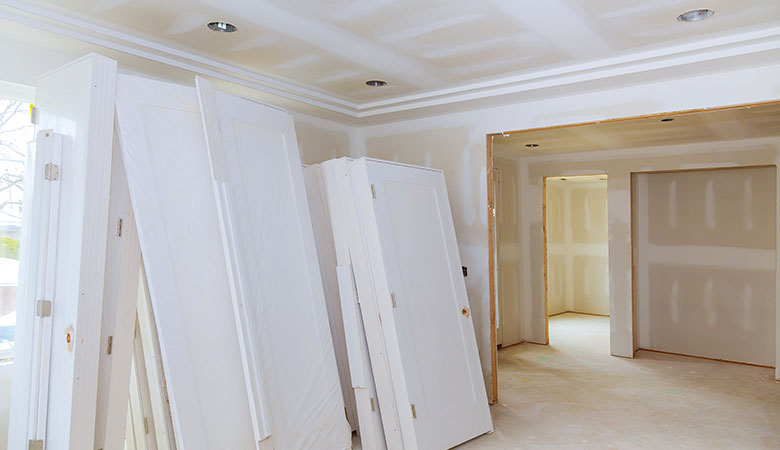
Drywall Done Right
Drywall builds the look of a room faster than any other trade. Yet a single small mistake can show through the paint for years. Uneven seams popped screws, or soft corners make walls feel cheap and unfinished. The good news is that most errors are simple to spot early and even easier to avoid with a plan. This blog highlights the most typical mistakes that homeowners and beginning DIY builders make while working with drywall. Each section covers one misstep, why it happens, and a clear fix you can follow today with basic tools and steady hands. Stay calm, learn, and finish smoothly.
Choosing Wrong Thickness
Drywall sheets are not one-size-fits-all. The two main options are 1/2-inch and 5/8-inch panels, and picking the wrong one invites cracking later. In homes, 1/2-inch works for standard walls and ceilings strapped at 16-inch centers. When joists span 24 inches or when local code calls for improved fire rating, step up to 5/8-inch Type X. The added mass controls sag over time and slows heat if a fire starts. Using 1/2-inch on a wide ceiling often means screw pops every hot summer. Before you buy boards, measure stud spacing, ask the building office about the code, and match the sheet to the load. Remember: heavier ceilings also sound better because thicker gypsum blocks echo and footsteps above.
Skipping Stud Checks
Nothing ruins a fast board hang like wavy framing. If studs lean or twist, the drywall follows, and joint tape suddenly refuses to lie flat. Before lifting the first sheet, take five minutes with a six-foot straightedge. Hold it across every stud line and mark bows deeper than 1/8 inch. For outward bumps, shave the wood with a hand plane. For hollow spots, add a wood shim or a ripped furring strip. Level framing means you will use less joint mud later and save hours of sanding. Check stud spacing, too: on a 16-inch grid, you can land sheet edges cleanly. Skipping this step might feel quick, yet fixing the lumps through mud takes longer and leaves weak seams and extra paint coats.
Poor Sheet Layout
The board layout is a little like laying bricks; stagger the joints, and they vanish. When all end seams stack over each other, they form a weak line that cracks as the house moves. Plan your pattern on paper before cutting any sheet. Start with a full board on the top corner of one wall, then work across it, keeping factory ends against factory ends whenever you can. On ceilings, run sheets across the joists, not along them, to avoid sag lines. Remember the four-foot rule: keep any edge at least four feet from the next parallel edge. Smart layout reduces butt joints, which always need more mud. Fewer joints also mean fewer chances for ridges; you must later sand flat and prime smooth for clean paint.
Bad Screw Setting
Driving screws too deep is the fastest way to create future nail pops, even when you use screws instead of nails. The screw head should sink just below the paper and press it firmly into the core without tearing the top layer. Use a drywall bit with a stop collar, or set the clutch on your driver at low torque. Keep spacing to eight inches on ceilings and twelve on walls, and stagger fasteners along sheet edges so the paper does not split. If a head tears through, back it out, move a fresh screw two inches away and fill the hole later. A little care here means no bumps under the paint and no cracks around loose screws. Your arms will thank you tomorrow.
Neglecting Joint Gaps
Drywall edges need a small gap, not a pinch fit. A 1/8-inch space at butt joints allows mud to seat well and stops sheets from grinding against each other when humidity shifts. Without a gap, seasonal swelling pushes panels together and lifts tape. Use a scrap of cardboard or a wood shim as a spacer while hanging boards. At corners, leave the gap toward the less-seen surface, such as a closet side. After hanging, fill the space with the first layer of the setting-type compound. It sets hard, and bonds edges together. Tape over that coat while it is still green. Tight joints may sound neat, yet the tiny space makes a stronger, flatter finish that lasts through many hot and cold seasons.
Overusing Joint Compound
The joint compound is mud, not frosting. Thick coats shrink, crack, and waste sanding paper. Aim for three thin passes: embed, fill, and finish. Each layer should be only as thick as the knife edge leaves behind. Follow this simple rule of thumb:
- Use a 6-inch knife for tape embedding.
- Switch to a 10-inch knife for the fill coat.
- Finish with a 12-inch knife, feathering eight inches beyond the joint.
Let each coat dry completely before applying the next. The time it takes to dry varies depending on how hot and how much air is in the room. For speed, choose a 20-minute setting of mud for the first coat, then switch to regular drying mud. Extra mud seems safer, yet thin layers hide better, dry quicker, and leave less dust to sweep.
Rushing Sanding Work
Sanding turns rough joints into a seamless face, but rushing this dusty step is a classic slip. Grab a bright work light and run it across the wall at a low angle; every ridge throws a shadow you can feel. Keep these tips in mind before the final wipe:
- Start with 120-grit paper on a pole sander.
- Switch to a hand sponge for corners and tight spots.
- Hold the sander flat; tipping cuts grooves.
Do not press hard. The goal is to kiss off high spots, not remove half the wall. Vacuum and damp-wipe between grits so loose dust does not clog the paper. Skipped edges and swirl marks will leap out under the paint, forcing you back to masks and mess again.
Ignoring Moisture Control
Moisture is drywall’s hidden enemy. A steamy bathroom, a cold exterior wall, or a basement with no vapor barrier all feed mold behind paint. First, choose the right board: use the mold-resistant green or purple board in showers and laundry rooms and cement backer in tile areas. Second, insulate cavities and add a vapor retarder on the warm side of the wall in cold regions. Third, exhaust fans should be run long enough to keep relative humidity under 50 percent. If you must hang board before a slab dries, run a dehumidifier and keep the air moving. Skipping these steps traps water inside paper and gypsum, leading to black stains and soft, crumbly cores that sag long before the next remodel or invite expensive mold remediation bills.
Painting Too Soon
Fresh mud looks dry long before the water has left the board. Paint too early, and you trap moisture that later forms bubbles and dull spots. Wait until the entire surface is uniform in color and feels cool but not damp under your palm. Use a moisture meter if you have one; 15 percent or less is safe. Before primer, sweep walls with a clean, soft broom, then wipe them with a microfiber cloth to grab loose chalk. Always start with a drywall sealer-primer; it locks the paper and mud so the finish paint spreads even. Roll primer in a straight-line pattern, keep a wet edge and let it dry overnight. Proper timing keeps color true and stops peeling later, especially in humid climates.
Build Smooth Walls
Building smooth, long-lasting walls is less about talent and more about small good habits repeated on every sheet. By choosing the right board, checking studs, laying sheets smart, setting screws with care, leaving proper gaps, applying thin mud, sanding with patience, controlling moisture, and giving paint time to cure, you avoid the nine mistakes that turn drywall jobs into frustrations. Keep this list on your tool bench the next time you start a room. The extra few minutes spent on each step will spare hours of repair, give every coat of paint a steady base, and make your home feel finished for years.